The Department of Medicinal Chemistry, Photopharmacology and Imaging
Logo

Location
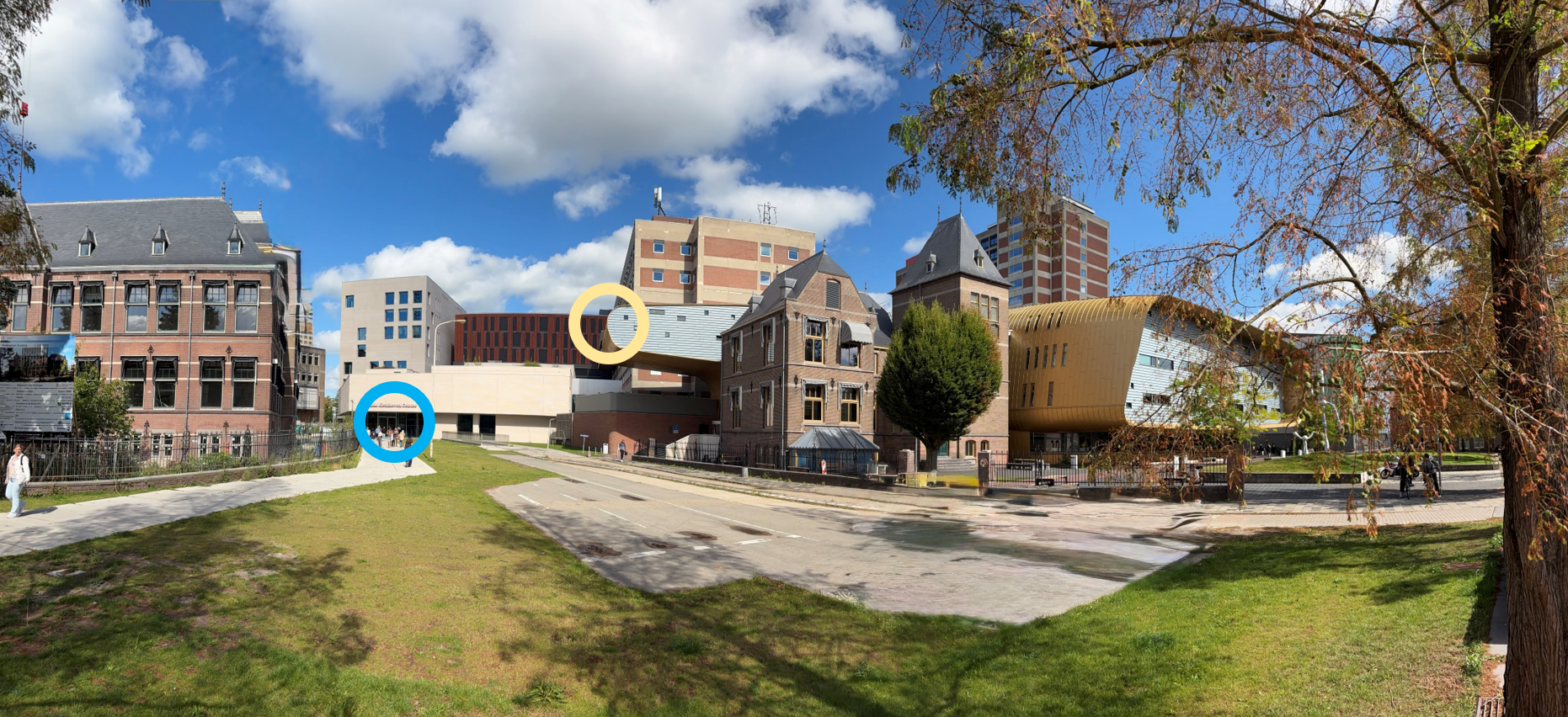
UMCG Healthy Ageing Campus in Groningen, Antonius Deusinglaan 1.
Entrance: blue circle. Department location: yellow circle.
About Us
The Medicinal Chemistry, Photopharmacology and Imaging (MCPI) department has established itself as one of chemistry hubs in Groningen. Our hearts beat on the fundamental research side while we look forwards towards clinical applications. Scientifically, we are driven by a simple idea: to activate the medicines only in those parts of the patient’s bodies where it is necessary, thereby avoiding side effects and emergence of drug resistance elsewhere. This idea poses us with two key questions: how do we know where the drug activity is needed (this is the imaging part in our name), and how do we selectively activate the drug (this is the photopharmacology part in our name). Medicinal chemistry binds it all together: in the end, it is at the level of molecules that all the imaging and therapy magic happens.
In addition we recently welcomed the Computer‑Aided Drug Discovery (CADD) Group as part of MCPI, bringing essential computational expertise directly into our research endeavours under supervision of Dr. Willem Jespers. The CADD team integrates computational chemistry, structural biology, and advanced machine-learning approaches to design and refine potential therapeutic molecules. Through high-throughput virtual screenings, molecular dynamics simulations, and predictive AI models, the CADD Lab identifies and optimizes promising photoactive scaffolds. We aim to seamlessly integrate these computational insights to inform and accelerate our synthetic medicinal chemistry efforts.

Our main approach to image-based pharmacotherapy is to build a molecular bridge between light and medicine. We use light to do the imaging (optical and optoacoustic imaging methods, and molecular MRI), and we use light (all the way from visible to gamma rays) to activate the drugs. To achieve this, we focus mostly on the organic synthesis of compounds that are both photoactive and bioactive. We create new light-responsive tools that will allow us to translate light to a biological effect, and we incorporate them into existing drugs, focusing mostly on the treatment of cancer and bacterial infections, where side effects and emergence of resistance are key upcoming threats to healthcare.

In our work, we are very strongly connected to our colleagues at UMCG. With the department of Nuclear Medicine, we work on using PET imaging to guide the drug activation. With the Optical Imaging group, we work on seeing the drug activation inside the body in real time. From our friends at the Surgery department, we learn of the true medical challenges and dilemmas that our work could solve. And we get access to real patient materials to confront our hypotheses with clinical reality!

We are also a group that does a lot of things together. For a rather selective overview of our scientific and fun activities, please go to www.szymanski-lab.nl and jesperslab.nl, to see our chronicle of everything from the celebration of published papers and conference visits to movie nights, concerts and dinners.